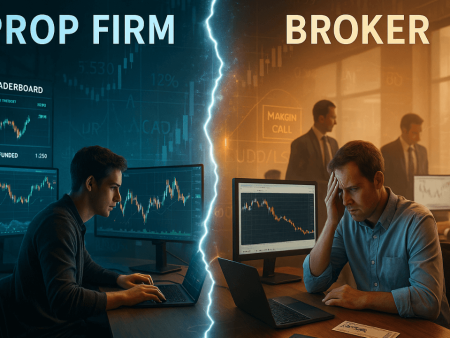
Prop Trading vs Market Making
Introduction: Understanding the Financial Trading Ecosystem
To the untrained eye, the world of trading can look like a chaotic digital battlefield. But step behind the scenes, and you’ll find it’s more like a sophisticated chess match where prop traders and market makers are two of the most strategic players. Understanding these roles is vital for anyone navigating the financial markets — whether you’re a trader, investor, or fintech entrepreneur.
What Are Trading Firms?
Trading firms are the powerhouses of the market. These are entities that deploy capital and manpower to buy and sell financial instruments like stocks, futures, options, and crypto. Some are proprietary trading firms (they trade their own money), while others are market-making firms (they ensure liquidity and orderly markets).
The Role of Trading in Modern Markets
Without traders, the financial markets would be like a ghost town. Prop traders and market makers help fuel price discovery, provide liquidity, and balance volatility. In today’s high-speed, algorithm-driven environment, these firms are not just participants — they are the architects of modern market dynamics.
Why This Comparison Matters Today
With the rise of funded trader programs, zero-commission brokers, and decentralized finance, more individuals are looking to join or emulate prop firms and market makers. Understanding the fundamental differences between these models could make or break your trading strategy — or your startup.
What is Proprietary (Prop) Trading?
Definition and Core Concept
Prop trading, short for proprietary trading, is when a firm uses its own capital to trade in the markets. Unlike hedge funds or mutual funds that manage client money, prop firms trade for themselves, aiming to profit directly from market movements.
How Prop Traders Make Money
These traders profit from directional bets — predicting whether an asset will go up or down and positioning accordingly. The profits (and losses) are kept by the firm. Think of it as “skin-in-the-game” trading, where the firm is both the house and the player.
Risk and Reward in Prop Trading
Prop trading is high-risk, high-reward. Some traders earn six figures in a few months, others get wiped out faster than you can say “stop loss.” Firms often deploy robust risk management systems, but when traders succeed, profit splits can be incredibly generous — up to 80% or more.
Typical Strategies Used by Prop Traders
- Momentum Trading
- Statistical Arbitrage
- Options Spreads
- Event-Driven Plays
- Market Sentiment Analysis
They might also leverage automated trading systems, back-tested algorithms, or a good old-fashioned gut instinct (backed by data, of course).
Compensation Structures
Most prop firms operate on a profit-sharing model. Traders keep a portion of the profits they generate, and firms may charge platform or training fees. The more you prove yourself, the better your split.
What is Market Making?
Definition and Purpose
Market makers exist to facilitate trades. They continuously post buy (bid) and sell (ask) prices on assets and profit from the spread — the difference between the two. They don’t bet on market direction; they’re the middlemen who make markets function.
How Market Makers Profit
Their primary revenue comes from bid-ask spreads, rebates from exchanges, and volume-based incentives. The key is execution efficiency and volume, not big wins on single trades.
Role in Providing Liquidity
Market makers are liquidity providers. Without them, trading would be slow, erratic, and costly. They help ensure that you can enter and exit positions quickly and at predictable prices.
Market Neutrality and Risk Management
Market making is about staying delta-neutral — they hedge positions rapidly to avoid exposure to market movements. Risk is mitigated through real-time analytics, hedging algorithms, and dynamic pricing models.
Common Market Making Strategies
- Quoting tight bid-ask spreads
- Delta hedging using options
- Pair trading and arbitrage
- Volatility modeling
- Exchange fee optimization
Prop Trading vs Market Making: Key Differences
Objective: Profit Generation vs Liquidity Provision
Prop trading aims to capitalize on market inefficiencies. Market making, by contrast, is more about maintaining liquidity and earning from volume, not taking big directional bets.
Risk Profile and Exposure
Prop traders take active risk with market direction. Market makers take inventory risk, but manage it using rapid hedging and statistical models.
Compensation and Incentives
Prop traders are rewarded for profitability. Market makers are rewarded for tight spreads and trading volume.
Trading Strategies and Time Horizons
Prop trading can range from scalping to swing trades to long-term options. Market making is mostly ultra-short-term, low-latency, high-frequency.
Regulatory Oversight and Compliance
Market makers face tighter regulatory scrutiny, especially if designated as official liquidity providers. Prop firms must comply with trading laws but have more internal discretion.
Shared Characteristics Between Prop Traders and Market Makers
Use of High-Frequency Trading & Advanced Technology
Both types of firms rely on low-latency infrastructure, co-location, and algorithmic trading. Tech is a massive moat.
Real-Time Market Participation
They both operate in live, high-pressure environments requiring real-time decision-making and market data interpretation.
Profit Motivation
At the end of the day, both chase profits — just via different mechanisms and risk appetites.
Access to Capital and Infrastructure
Whether it’s a prop firm or a market maker, institutional capital, leverage, and premium data feeds are common tools of the trade.
Can a Firm Be Both a Market Maker and a Prop Trader?
Blurred Lines in Modern Trading Firms
Absolutely. Some of the biggest firms — like Citadel Securities or Jane Street — do both. They switch hats as needed, depending on the strategy and market opportunity.
Case Studies: Dual-Function Firms
- Jump Trading: Known for both prop strategies and providing liquidity in crypto markets.
- Optiver: A global market maker with a strong proprietary options trading desk.
- DRW: Invests and trades with its own capital across multiple verticals, including derivatives and crypto.
Why the Distinction Is Less Clear Today
In today’s tech-driven world, algos can perform both roles simultaneously. A trading bot can quote spreads and go directional in the same second. Welcome to the future.
Which is Better: Prop Trading or Market Making?
Depends on Objectives and Risk Tolerance
Want adrenaline and big wins? Prop trading might be your jam. Prefer steadier, scalable income? Market making is the slow-and-steady tortoise.
Career Perspective: Skill Sets and Rewards
- Prop traders need intuition, analytical chops, and resilience.
- Market makers need precision, quant skills, and code fluency.
Both paths can be lucrative — it just depends on your style.
Firm Perspective: Business Models and Capital Allocation
Firms often weigh:
- Profit potential
- Regulatory burdens
- Technological requirements
- Scalability
Market making tends to be more capital-intensive but scalable. Prop trading is more flexible but relies on top talent.
Final Thoughts
The Future of Trading Firms
As AI and blockchain reshape markets, the line between these roles will blur even more. Expect more hybrid firms and algorithmic innovation.
How Technology Is Reshaping Both Models
From low-latency order routing to quant research platforms, tech is now the biggest differentiator. Firms that invest in innovation will dominate.
What Traders and Investors Should Keep in Mind
Understanding the differences and overlaps between prop trading and market making helps you choose the right path, whether you’re aiming for a career in trading or building your own firm.
FAQ
Yes, but firms must comply with regional regulations, especially after the Volcker Rule in the U.S.
Absolutely — especially in volatile markets when spreads widen unexpectedly or hedges fail.
Many offer internal training programs, especially for funded accounts or junior traders.
Significant. They often require millions to billions in capital due to the scale of inventory and margin needs.
About the Author

Ian Cabral is the co-founder and Chief Operating Officer of SecretsToTrading101.
With a background in computer engineering and over 10 years of experience in forex trading, Ian helps lead the technical and operational side of the business. His work focuses on trading tools, automated systems, platform processes and educational resources that help traders better understand market structure, trading conditions and risk.
Ian supports the development of practical trading resources designed to make complex trading concepts easier to understand. He also helps ensure that SecretsToTrading101’s tools and education remain clear, structured and aligned with real trading challenges.