Understanding Proprietary Trading and Tax Implications
What Is a Prop Trading Firm?
A proprietary trading firm—commonly called a “prop firm”—is a financial institution that lets you trade the firm’s capital instead of risking your own. In return, the firm typically takes a cut of your profits. Think of it like being a quarterback with a team supplying the playbook, stadium, and gear—all you have to do is show up and make the plays.
This model has exploded in popularity thanks to remote trading, scalable evaluations, and structured funding programs. Whether you’re working with big players like FTMO or emerging challengers like MyForexFunds or Topstep, prop trading firms provide access to significant capital without requiring personal investment. But as appealing as this sounds, it comes with a side dish of tax complexity—something every trader should understand before year-end rolls around.
How Prop Traders Are Paid
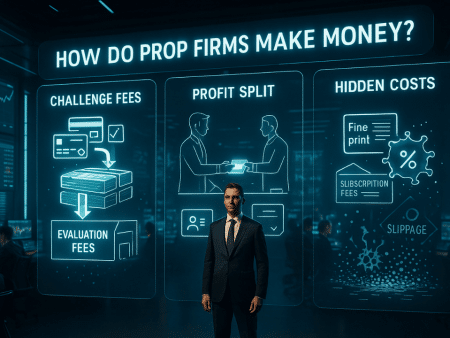
Most prop firms use a revenue split model, commonly ranging from 75/25 to 90/10, favoring the trader. That means if you make $10,000, you might keep $9,000, and the firm pockets $1,000.
However, since you’re technically not an employee, you don’t get a W-2. Instead, many traders receive a 1099-NEC or equivalent depending on jurisdiction. Some firms also use digital wallets or crypto, which adds a whole new layer of tax intrigue (and IRS attention).
Why Taxes Are Different for Prop Traders
Prop trading income isn’t always neatly classified as capital gains like traditional investing. It often gets labeled as self-employment income, which means you’re responsible for your own taxes—both income tax and self-employment tax (yes, the IRS wants both pieces of your pie).
This difference matters because the deductions you’re eligible for—and the way you file—can vary dramatically. If you treat your prop trading like a business, the IRS might allow you to deduct a range of expenses. But mess it up, and you might miss out on thousands in tax savings or trigger an audit.
How Income from Prop Trading Is Taxed
Capital Gains vs. Ordinary Income
Here’s where things get spicy: not all trading income is treated equally. If you trade through a personal brokerage account, you’re likely dealing with capital gains. But as a prop trader, your income might be classified as ordinary income, especially if you’re trading frequently and receiving profit splits.
This matters because capital gains are taxed at a lower rate (0% to 20%) while ordinary income can climb up to 37%. Ouch, right?
Revenue Split and Performance Fees
Let’s say your firm gives you 80% of profits. That share is your taxable income. But wait—can you deduct the firm’s 20% as a business expense? Unfortunately, no. The IRS treats it as “not your income to begin with,” so you only report your cut.
However, fees paid to the firm for evaluation, subscriptions, and withdrawals? Those might be deductible. More on that soon.
Self-Employment Tax Considerations
Because you’re an independent contractor, you’re liable for self-employment tax, which is 15.3% on net earnings up to a cap (and additional Medicare tax after that).
But here’s the kicker—you can deduct half of this tax on your Form 1040. It’s one of the few perks of this setup, so don’t forget it.
Trading Entity vs. Individual: Tax Differences
Forming an LLC or S-Corp can help you legally reduce tax liability and unlock more deductions. As a sole proprietor, your options are more limited and scrutiny is higher. We’ll dive deeper into this when we discuss business structures.
Tax Deductions and Write-Offs for Prop Traders
Home Office Deduction
If you’re trading from your bedroom, spare room, or that corner you’ve turned into a trading dungeon—good news. The IRS allows a home office deduction if that space is used exclusively and regularly for business.
You can choose between two methods:
- Simplified Method: $5 per square foot, up to 300 sq ft.
- Actual Expense Method: A portion of rent, mortgage, utilities, and maintenance based on the square footage used for trading.
But remember: no gaming, Netflix, or family dinners in your trading space—or the IRS might call foul.
Software, Subscriptions & Trading Tools
From TradingView to MetaTrader add-ons and market scanners like Bookmap, most professional trading tools are deductible if used in your business. That includes:
- Data feeds (e.g., Level II quotes)
- Market research subscriptions
- Charting platforms
- Algo tools and backtesting systems
Just make sure you’re not also using them solely for personal investments—business use must be your primary purpose.
Evaluation & Platform Fees
The cost of prop firm evaluations (think FTMO’s $155 fee or Apex’s $80 fee) may be deductible as startup or training expenses, depending on whether you pass and earn funding.
If you’re actively trading and generating income from a firm, ongoing platform access fees are 100% deductible as necessary business expenses. Keep every receipt, and record whether the fee was refundable or part of a challenge.
Internet, Phone, and Utilities
Your internet connection is like your trading lifeline. So yes, a portion is deductible if it’s used to run your trading business. The same goes for:
- Cell phone bills (business use portion)
- Electric bills (if trading space is part of your home office)
- Hardware maintenance (routers, modems, etc.)
Pro tip: Document usage with a time log or percentage allocation based on business vs. personal use.
Continuing Education and Courses
That $500 Udemy course on technical analysis? The mentorship program that gave you your edge? Education directly related to your trading business is tax-deductible under IRS Publication 970.
This includes:
- Webinars
- Online courses
- Trading bootcamps
- Mentorships and coaching programs
Just make sure the training enhances your current skill set and isn’t a total career shift.
Travel and Networking Events
Attending the Traders Expo in Las Vegas or flying to a prop firm seminar in New York? Congrats—you might be able to deduct:
- Airfare
- Hotel costs
- Meals (usually at 50%)
- Transportation
Just keep the receipts and tie the event directly to your business. And no, Vegas slots don’t count as research.
Accounting and Legal Fees
If you hire a CPA to file your taxes or consult with a lawyer about forming an LLC or handling a dispute with a prop firm, those fees are 100% deductible.
Even tools like TurboTax Business or QuickBooks for self-employed traders count if used to manage your trading records.
Prop Firm Fees: Are They Deductible?
Yes—and no. Here’s the nuance:
- Challenge fees (if passed): Often deductible as a startup or business expense.
- Monthly platform fees: Deductible if trading is ongoing.
- Fees for failed evaluations: Deductible if trading is your main profession, and you’re actively pursuing funding as part of your business model.
When in doubt, document everything and consult a tax professional.
Choosing the Right Business Structure
Sole Proprietorship vs. LLC vs. S-Corp
Most traders start as sole proprietors by default, but this can limit your deductions and increase audit risk. Forming an LLC or electing S-Corp status can offer protection and tax advantages.
- Sole Proprietor: Easy setup, but all income is subject to self-employment tax.
- LLC: Offers liability protection and flexibility; taxed as sole prop, partnership, or S-Corp.
- S-Corp: Reduces self-employment tax via salary/distributions, but requires payroll and strict compliance.
Pros and Cons of Each Structure
| Structure | Pros | Cons |
|---|---|---|
|
Sole Prop |
Simple, low cost |
Fewer deductions, full SE tax |
|
LLC |
Legal protection, tax flexibility |
State filing fees, admin tasks |
How Structure Impacts Your Write-Offs
Entities like LLCs and S-Corps can unlock new deductions, including:
- Health insurance premiums
- Retirement contributions
- Home office reimbursements
- Salaries and payroll tax planning
An LLC taxed as an S-Corp is often the sweet spot for six-figure traders.
State, Local, and International Tax Considerations
State Income Taxes
Live in California or New York? You may owe state taxes on your trading income, even if your firm is in a no-tax state like Texas or Florida. Where you live—not where the prop firm is—usually dictates tax exposure.
City or Local Tax Impacts
Cities like New York City and San Francisco impose additional taxes on self-employed individuals. Factor in local business license requirements too.
Foreign Earned Income & Exclusion
Live overseas? You may qualify for the Foreign Earned Income Exclusion (FEIE) under IRS Form 2555, shielding up to $120,000+ of income (as of 2025) from U.S. tax—if you meet residency or physical presence tests.
Tax Treaties and Double Taxation
Trading with an offshore firm or while living abroad? U.S. citizens must report global income—but tax treaties can prevent you from paying twice. Use Form 1116 to claim foreign tax credits.
FATCA and International Reporting Obligations
If your prop firm pays through a non-U.S. bank or crypto wallet, and your foreign holdings exceed $10,000, you must report using FBAR (FinCEN Form 114) or FATCA (Form 8938).
Failure to report? Huge fines. Not worth it.
Tax Planning Tips for Prop Traders
Quarterly Estimated Tax Payments
Avoid IRS penalties by making quarterly estimated payments using Form 1040-ES. Set reminders for:
- April 15
- June 15
- Sept 15
- Jan 15 (following year)
Estimate your total income, subtract deductions, and divide by four.
Retirement & Tax-Advantaged Accounts
Yes, traders can use:
- Solo 401(k)
- SEP IRA
- Roth IRA (if income qualifies)
This reduces taxable income and builds wealth. Double win.
Tax Loss Harvesting Strategies
Even if your trades aren’t capital gains, you can offset income by selling losing assets and claiming the loss. Just beware of wash sale rules if you rebuy the asset within 30 days.
The Importance of Record-Keeping
A shoebox of receipts won’t cut it. Use:
- QuickBooks
- Toggl or Harvest for time tracking
- Expensify or Google Sheets
Keep copies of prop firm payouts, invoices, fees, and communication. The IRS loves paper trails.
Hiring a Tax Professional or CPA
Unless you moonlight as a tax attorney, hire help. Look for:
- CPAs with trader clients
- Enrolled Agents (EAs) familiar with Schedule C & Form 1120S
- Tax attorneys for complex entity setups
They’ll help you pay less, stay legal, and sleep better during tax season.
Conclusion
Key Takeaways on Prop Trading Deductions
- Prop trading income is typically taxed as self-employment income, not capital gains.
- You can deduct legitimate business expenses like home office, trading software, and platform fees.
- Structuring your business as an LLC or S-Corp can maximize write-offs and minimize tax liability.
Final Thoughts on Staying Compliant & Maximizing Write-Offs
Trading is hard enough without the IRS breathing down your neck. Treat your prop trading like a business, not a hobby. That means planning ahead, keeping records, and staying compliant. Done right, you’ll not only reduce your tax burden but also build a real, scalable income stream with confidence and clarity.
FAQ
If you receive a 1099-NEC, report the income on Schedule C and deduct all related expenses.
Yes, if you’re actively trading or using evaluations as part of a business pursuit—not just testing the waters.
Yes, especially if you earn consistently or want legal protection and more write-off options.
Usually yes—unless you’ve formed an S-Corp and structured part of your income as distributions.
Often, yes. Especially if you pass the challenge and go on to earn funded income.
You must report global income and may have extra forms (FBAR, FATCA). Seek expert help.
About the Author

Ian Cabral is the co-founder and Chief Operating Officer of SecretsToTrading101.
With a background in computer engineering and over 10 years of experience in forex trading, Ian helps lead the technical and operational side of the business. His work focuses on trading tools, automated systems, platform processes and educational resources that help traders better understand market structure, trading conditions and risk.
Ian supports the development of practical trading resources designed to make complex trading concepts easier to understand. He also helps ensure that SecretsToTrading101’s tools and education remain clear, structured and aligned with real trading challenges.