Table of Contents
ToggleWhy Prop Firms Are Under Pressure in 2024
Regulatory Crackdowns and Legal Challenges
In 2024 proprietary trading firms received more attention from regulatory bodies. The U.S. Commodity Futures Trading Commission and other regulators around the globe increased their supervision. This led to greater requirements for firms to follow rules. Prop firms had to consider their methods of operation again to make certain they followed the developing legal rules.
Broker Relationships and Tech Stack Vulnerabilities
Proprietary trading firms use brokers and platforms from other companies. This practice creates weaknesses. Problems with broker services or technology breakdowns can hurt trading. Firms are now putting money into reliable, internal technology systems. The intent is to lessen those dangers and keep operations running without interruption.
Public Trust and the Rise of Scam Accusations
Many deceptive schemes pretend to be real proprietary trading firms. This trend harms public trust. Well-known frauds cause traders to become more careful. On that account actual firms work to show how they operate clearly. They also build trust by providing records that people can check and following the rules.
How the Prop Firm Business Model Works
Funding, Splits, and Challenges
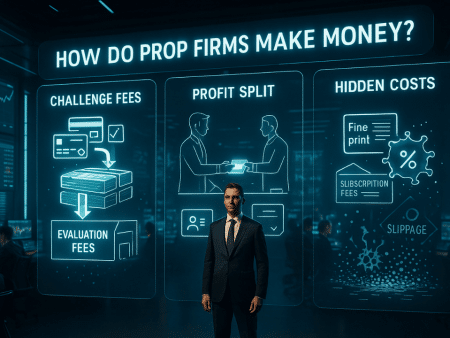
Trading firms give traders funds. Traders use the funds for trading. The firms receive part of any profits. A typical split gives traders 70 % to 90 % of the profits. Traders usually must complete assessments. The assessments show consistent profits and good risk control. Strict rules and required performance can cause difficulties.
Differences Between Real and Simulated Accounts
Some prop firms offer simulated accounts, where trades are not executed in live markets, while others provide real accounts with actual market exposure. Simulated accounts allow firms to assess a trader’s strategy without financial risk, but they may not accurately reflect real market conditions. Traders should understand the type of account offered to align expectations accordingly.
Why Some Traders Blame the Business, Not Themselves
When traders fail to meet profit targets or violate risk parameters, they may attribute their shortcomings to the firm’s rules or market conditions. However, successful trading requires personal accountability, adaptability, and continuous learning. Recognizing one’s role in trading outcomes is crucial for growth and success in prop trading environments.
Are All Prop Firms at Risk — or Just a Few?
Reputable Firms vs. Copycat Platforms
The prop trading industry contains firms that have a long history and newer firms. These newer firms want to make money because the model is popular. Firms with good reputations often show how they work, have understandable ways to judge traders as well as have communities where traders give help. Then again platforms that copy others may not have the right support structure. This can result in traders failing more often and not being happy.
Risk Factors That Separate Winners from Losers
Risk management rules help a prop firm do well. Good computers and systems also help. A firm must follow all the rules set by regulators. Support for traders is important too. Firms put money into these parts. They then handle hard times in the market better. These firms also stay open. Some firms do not care about all this. They may then have trouble and get a bad name.
The Impact of Closures on Retail Traders
What Happens When a Prop Firm Shuts Down?
The closure of a prop firm can leave traders without access to capital, unpaid profits, and a sense of uncertainty. Such events underscore the importance of due diligence when selecting a prop firm, including assessing financial stability, regulatory standing, and community feedback.
Red Flags to Watch Before Signing Up
- Lack of regulatory oversight or unclear licensing information
- Unrealistic profit targets or promises of guaranteed returns
- Opaque fee structures and withdrawal policies
- Negative reviews or unresolved complaints from traders
- Limited or no customer support channels
The Future of Prop Trading: Industry Predictions
Regulation Will Intensify — But That’s Not All Bad
Increased regulation aims to protect traders and ensure market integrity. While compliance may raise operational costs for firms, it also fosters a more trustworthy environment, attracting serious traders and institutional interest.
From Gamification to Professionalization
The prop trading industry is shifting from gamified trading challenges to more professional, career-oriented models. Firms are offering structured training programs, mentorship, and clearer career progression paths to attract and retain top trading talent.
Hybrid Models and New Market Entrants
Proprietary trading firms that are new begin to use mixed approaches. They combine aspects of standard proprietary trading operations with up-to-date financial technology answers. These approaches give more choice, such as chances to trade from far away and different types of assets. This attracts more traders.
How to Choose a Sustainable Prop Firm in 2025
Key Criteria to Vet Any Prop Firm
- Regulatory Compliance: Ensure the firm is registered with relevant financial authorities.
- Transparency: Look for clear information on profit splits, fees, and trading rules.
- Technology: Assess the quality of trading platforms and tools provided.
- Support: Evaluate the availability of educational resources and customer service.
- Reputation: Research reviews, testimonials, and the firm’s history in the industry.
Questions Every Trader Should Ask
- What are the specific evaluation criteria and rules?
- How does the firm handle profit withdrawals and account scaling?
- What support systems are in place for traders?
- Are there any hidden fees or costs?
- How does the firm ensure the security of trader funds and data?
Final Thoughts: Will Prop Firms Still Be Around Next Year?
The proprietary trading industry is changing a lot. Regulatory changes and technological vulnerabilities create problems. Firms that adjust to change through transparency, a good infrastructure as well as trader support have a good chance to do well. For traders a good move is aligning with firms that plan for the future. Such alignment will help traders move through the changes in prop trading in 2025 and later.
FAQ
Yes, but only if you choose a reputable firm. While the industry is under pressure, the best firms are adapting with stronger compliance, better tech, and more trader support. Choose wisely.
Check for regulatory registrations, transparent fee structures, verified trader reviews, and clear payout policies. Legitimate firms also offer clear communication channels and detailed rulebooks.
A mix of regulatory crackdowns, poor risk management, and unsustainable business models. Firms that lack a solid foundation or attempt to cut corners are struggling to survive the 2024–2025 scrutiny.
You may lose access to your account, unpaid profits, or evaluation fees. That’s why it’s crucial to perform due diligence and avoid firms with unclear exit strategies or poor financial transparency.
Not necessarily. Simulated accounts can help evaluate your trading skills without risking real capital. However, problems arise when firms mislead traders into thinking their trades are live when they’re not.
No—but it will reshape it. Regulation is likely to drive out bad actors and elevate firms that prioritize transparency, security, and long-term trader success.
About the Author

Ravi Vaswani is a content writer at SecretsToTrading101 with active trading experience since 2023 and a background in affiliate marketing. He primarily trades the London session, focusing on EURUSD, with additional coverage across GBP pairs, indices, and longer-term crypto analysis. His work is grounded in Smart Money Concepts, clean execution, and disciplined risk management, with a focus on making trading content clear, practical, and trustworthy.