Digital currency is not just a niche pursuit for people interested in technology or for those who dislike government – it combines traditional finance with popular internet trends, bringing in substantial capital and much misunderstanding. If you ponder whether to invest in Dogecoin or Cardano, or what divides an altcoin from a memecoin, you came to the right spot. This explanation will clarify the topic simply, with some humor along with with the facts important for your digital currency account.
Table of Contents
ToggleWhat Are Altcoins?
Definition and Overview
An altcoin is a short term for an alternative coin – it means any cryptocurrency other than Bitcoin. Bitcoin is the original rockstar. Altcoins are the other artists that came after. Some were revolutionary, but others were less so.
Altcoins include Ethereum, which showed smart contracts to most people; they also include lesser known tokens such as VeChain or Zilliqa. Each one solves a problem or develops in its specific area.
Types of Altcoins
Altcoins aren’t a monolith. There are several categories:
- A utility token, like Chainlink, lets a person use services within a platform.
- A stablecoin, for instance USDC, ties to a fiat currency. This minimizes price changes.
- A governance token, such as UNI, provides voting rights. Holders of this token decide on a project’s future.
- A security token shows ownership in assets from the real world – these assets include stocks or property.
Key Examples (Ethereum, Cardano, Solana)
- Ethereum (ETH), serves as the main support for much Web3 development. The platform allows for smart contracts, decentralized finance, and non fungible tokens.
- Cardano (ADA), rests on academic research plus peer review – it has a great vision but its execution proceeds slowly.
- Solana (SOL), works very fast and scales well. The platform is sometimes unavailable more often than a bad mood.
Use Cases and Technology Behind Altcoins
Altcoins generally solve particular problems.
- Ethereum permits decentralized applications and finance.
- Chainlink links smart contracts to data from the world.
- Polkadot attempts to join blockchains in a common system.
Altcoins often show complex ways that computers agree on data. A capable developer community works on them, plus they commonly possess real world use.
What Are Memecoins?
Definition and Origins
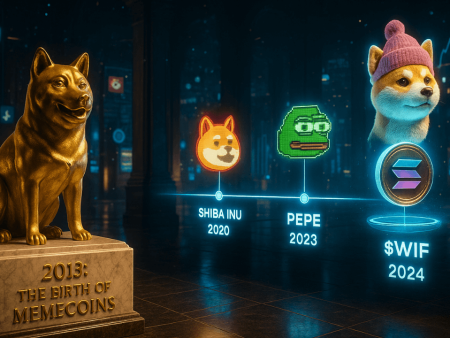
Memecoins act like another type of coin; they grow from internet culture and humor. People create them as a joke. But they bring real financial outcomes. Consider Dogecoin – it came out in 2013 to mock Bitcoin. Elon Musk promoted it greatly in 2021.
Popular Examples (Dogecoin, Shiba Inu, Pepe)
- Dogecoin (DOGE): The Shiba-faced original. Simple, inflationary, and still running on its charm.
- Shiba Inu (SHIB): Dubbed the “Dogecoin killer.” Built on Ethereum, with more advanced tokenomics.
- Pepe (PEPE): A newcomer with deep meme roots and wild speculative hype.
The Role of Community and Hype
Altcoins have technology to support them. Memecoins rely on Twitter posts, Discord groups along with TikTok videos. Their core is how fast they spread, which comes from memes, popular people as well as the fear of missing out.
Memecoins usually do not have a practical use. But they get popular as people trust in the shared meme idea. This is like the GameStop stock event, but it uses crypto.
Risks and Volatility
Memecoins are the crypto equivalent of scratch-off lottery tickets:
- Massive upside potential (if you get in early).
- Wild volatility—think 1000% gains followed by 95% drops.
- Scams and rug pulls
In short, don’t mortgage your house for a meme.
Memecoins vs Altcoins: Key Differences
Time for the main event: How do these two coin classes stack up against each other?
Purpose of Creation
- Altcoins: Created to solve real problems or innovate on blockchain use cases.
- Memecoins: Often born from jokes or internet trends, with no technical mission.
Underlying Technology
- Altcoins: Backed by robust codebases, unique consensus models, and development teams.
- Memecoins: Many are copy-pasted contracts with minimal innovation.
Real-World Use Cases
- Altcoins: Enable DeFi, supply chain tracking, smart contracts, NFTs, etc.
- Memecoins: Mostly speculative. Some offer staking or pseudo-utility post-hype.
Price Stability and Volatility
- Altcoins: Volatile, but usually tied to market trends and use-case developments.
- Memecoins: Highly unpredictable. One influencer tweet can spike or crash them.
Popularity and Community Support
- Altcoins: Backed by developers, investors, and crypto veterans.
- Memecoins: Cult-like communities, driven by memes and social buzz.
Regulatory and Investment Risks
- Altcoins: Under increasing regulatory scrutiny, but more likely to survive crackdowns.
- Memecoins: High risk of being classified as unregistered securities or outright scams.
Long-Term Potential
- Altcoins: Viable long-term plays based on utility and adoption.
- Memecoins: 90%+ may vanish; 1% could moon. It’s speculative roulette.
How to Decide: Should You Invest in Altcoins or Memecoins?
Risk Tolerance and Investment Goals
- Altcoins suit long-term thinkers who want to diversify outside of Bitcoin.
- Memecoins are for thrill-seekers with high risk tolerance and meme-literacy.
Market Trends and Sentiment
Memecoins thrive in bull markets when retail enthusiasm spikes, while altcoins maintain relevance through utility and ecosystem growth across cycles.
Utility vs Speculation
If you value use-case-driven growth, altcoins are the play.
If you’re riding the YOLO-coaster of speculation, memecoins may appeal.
Portfolio Diversification Strategies
- Balanced Portfolio: 70% BTC/ETH, 20% altcoins, 10% high-risk memecoins.
- Always DYOR (Do Your Own Research) and never invest what you can’t afford to lose.
Conclusion
Quick Summary of Key Differences
| Feature | Altcoins | Memecoins |
|---|---|---|
|
Purpose |
Tech innovation |
Humor & hype |
|
Use Case |
Real-world functionality |
Rare, often speculative |
|
Volatility |
Medium to high |
Extremely high |
|
Technology |
Advanced protocols |
Often basic, reused code |
|
Community |
Developers, investors |
Meme lovers, online influencers |
|
Risk Level |
Medium |
Very high |
Final Thoughts on Choosing Between Memecoins and Altcoins
Altcoins are like startup companies, some will fail, but many have serious potential. Memecoins? They’re like viral TikToks—fun, unpredictable, and sometimes life-changing (for better or worse).
Know your goals, understand the risks, and don’t let FOMO lead your portfolio.
FAQ
They’re more than a fad—but most are short-lived. However, a few like DOGE have achieved cultural status and surprising longevity.
Not likely. Bitcoin is digital gold; altcoins are the Swiss army knives of blockchain utility. They complement more than compete.
Memecoins are generally much riskier due to hype cycles, lack of fundamentals, and community-driven volatility.
They’ll likely continue to ebb and flow with internet trends. Some may evolve into legitimate projects; most will not.
About the Author

Andrew Edwards is the co-founder of SecretsToTrading101 and has years of practical experience in online trading, prop firm evaluations and financial content review. He specialises in helping traders understand trading rules, challenge requirements and platform conditions so they can make informed decisions. Andrew oversees the accuracy of our prop firm guides and ensures all information is reviewed against current firm terms and risk standards.